






My Relationship Is Polyrhythmic
My relationship with Diane is polyrhythmic.
It is not the poly style most people think of when considering relationship structures outside the cultural norm, but it’s a way of creating a life together that is lasting, secure, surprising, and, most of all, deeply fulfilling.
This love letter is truly a love letter to my beloved: a celebration of our union and an exploration of how the way we’ve chosen to create a life together is a deep reflection of what I believe to be the most natural way humans have evolved to love.
Two rhythms at the same tempo
A polyrhythm is a musical structure where two or more independent rhythms are played together, at the same tempo. Two (or more) rhythmic loops repeat in the same timeframe, but they are divided into a different number of beats. For a simple visual of how this works, I love Robert Inventor’s Bounce Metronome in this old YouTube video.
How does this musical structure influence ways of relating in intimate union? First, both rhythms are anchored to the same starting point. When we fell in love (I wrote about my unlikely first encounter with Diane in my last letter), we made a conscious decision to do this together. Diane told me, with a smile, that “we’re gonna have so much fun.”
For polyrhythm to work, both rhythms must begin at (and return to) the same starting point. In relationship, this could be the same life vision, the same dreams, or the same core values.
As I write these words, I’m emerging from a ceremony in one of the initiatory traditions we practise, and the core insight from my journey is at the forefront of my mind. I had never really considered the full depth of what it truly means to choose to live a life together before.
As one participant shared with me after his own journey, “we are born alone and we die alone, and the time we are given in between is so precious.”
Indeed, and therefore what a monumental thing it is to make a decision to share that precious time, that’s ever ticking away, with another person.
Returning to the one
We start from the same place.
Time, and our own rhythm of living, springs forth from this beginning, and we return to that starting point again and again. This returning to the one is what transforms any arrangement of noise into rhythm, the recognisable and reassuring return home. Then we repeat.
There is a delight in that coming back together, time and time again, as we move through our lives. At different times, one rhythm might be moving quickly, and one more slowly, and we might take on different rhythms through our different life phases. The conscious return, day after day, month after month, to that same, shared point of orientation is what builds secure attachment, and what reminds us why we are doing this together in the first place.
Returning to the one is a replenishment of our emotional, intimate and spiritual selves, each round of the song adding new layers of life experience to the unfolding groove of a shared life.
A hermit and a dérive
In my relationship with Diane, this principle expresses itself across multiple frames of time.
I work best, and feel most alive, when I spend most of my day in solitude and silence. I feel a deep sense of gratitude that my life affords me the possibility to live in this monastic way.
Diane is more social, and finds nourishment in spontaneous adventures. She is a champion of the dérive, the psychogeographical concept, popularised by Guy Debord, of setting out on unplanned and spontaneous journeys through the urban landscape. He considered this a necessary response to the increasingly predictable and monotonous experience of everyday life in advanced capitalism.
I relish a day at home with a joy comparable to Diane’s social spontaneity, moving mindfully through a slow, steady routine of my work, spiritual and musical practices, with the minimum external input. The life of a hermit is my not-so-secret fantasy!
This is how we live on a week-to-week basis. Every year, Diane also spends a few months travelling alone, in an extended dérive, while I have the solitary pleasure of extended hours, days and weeks in a slow, monastic rhythm on our homestead.
We always return to the one. The expectation, anticipation and eventual resolution of this rhythm are what give so much life, vibrancy and sustainability to our love.
We have an unfettered freedom together to be who we most truly are, in our individuality, yet still cherish the shared vision, love and intimacy that comes from choosing to live this adventure together.
When you and your partner get so close that you’re now a fusion rather than two separate people, you no longer have anyone to connect with. You have to reintroduce distance if you want to reintroduce desire. This can be psychological distance, for example, asking your partner to ignore you rather than immediately greet you when you get home from work. Or it can be literal — one of you leaves for a while. Either way, it can be helpful to think of the distance-creation as sexual play rather than a rejection. It can also help to remember that the closeness you and partner have established gives you a strong foundation to return to.
— Esther Perel, Mating in Captivity
The health of the whole system
The more experience I gain working the land, the more I see this way of relating as a reflection of the forest’s innate wisdom. In a syntropic system, our practice is to continuously return to a vision of the whole. What is the health of the ecosystem? Which parts of the tree lines are flourishing? Where are the areas that need more attention? Where do I need to water more liberally, or mulch more heavily? The parallels to a healthy, vibrant relationship are obvious, but perhaps less so is the understanding that in an abundant system, trees have different purposes, and therefore different lifespans.
It is fascinating to observe a forest from afar during a windstorm. If you watch the treetops, you will see how each tree moves slightly differently when the wind hits it. Some right themselves as others begin to bend. This means that when one tree is bending over, the tree next to it is providing support. The whole forest moves, but each individual tree moves to its own rhythm, protecting its neighbors and making the forest strong in the face of the storm.
— Peter Wohlleben, Forest Walking
In agroforestry, there is no taboo against cutting down trees; the issue is always not planting or replanting enough.
I was reading a lively exchange on Instagram this week in which (yet another) conversation had been sparked about the validity of the term “ceremonial grade” in relation to cacao. It’s a conversation I’m somewhat weary of at this point; however, what caught my eye was a list put forward by a group of people who had attempted to create a set of concepts to define the term. One principle was that in a “ceremonial” approach, trees that are not productive are not cut down, but are allowed to live out their full life span.
This is a romantic idea, and one that could only come from people who don’t actually work the land. Agroforestry is hard work, and even walking up and down tree lines over a modest two-acre plot like ours to inspect the life and vitality of the system requires a significant expenditure of energy each day.
As humans, we are active and engaged participants in a system teeming with life. If we are growing trees from seed, we always plant significantly more seeds than we’ll eventually allow to grow to maturity. Humans have been doing this for as long as we’ve tended our plots, selecting for vitality, vigour and sweetness. A tree that has struggled to establish itself will be removed, its branches and trunk chopped, and returned to the earth with gratitude as it breaks down and feeds the microbes of the forest floor.
To return a tree to the earth like this is a beautiful process. It’s a gift to the earth, and one offered in gratitude and knowing that it will allow more vibrant life to follow in its wake.
The pulse of living
In our relationship, we have always taken the same approach. Whenever one of us realises that there is some aspect of our relating that’s not living in full vibrancy, we first observe what’s going on, and then attempt to identify together the root cause. We collaborate on forming a remedial plan. Is more nourishment required in this area of our lives? Is this something we need to remove entirely, and give thanks for the insight it’s brought us, to make space for new life to emerge in the space left behind?
This is a co-creative process, and reframes “problems” as invitations and experiments for change. It also creates a pulse of living, and each round of the rhythm offers its own obstacles and gifts.
After we set off once more from our shared starting point, we have the spaciousness to live by our own design, our own feel through life. To be held so deeply in the love of another, while simultaneously experiencing the freedom to pursue the dreaming of our own hearts, is a very precious gift. It’s one I don’t take for granted in my relationship with Diane, and it’s an invitation I encourage all lovers to explore in their own unions.
Over time in a relationship, as long as you’ve got clear communication skills, as long as you’re processing your stuff, as long as you’re holding a space where past traumas of previous relationships and things that have gone wrong can be witnessed and healed and released, you drop into a deeper and deeper space of love together.
— Sarah Rose Bright, Making Love Last
Holding that kind of space is a practice in itself, and if you feel ready to offer conscious guidance to others, our facilitator training takes you step-by-step along that journey.
This week’s invitation
This week’s invitation is to plan a date with your lover, or a date with yourself if you are not in union, as, of course, our primary relationship is always with ourselves.
Schedule at least an hour, and mark it in the calendar.
Prepare a cacao using your favourite recipe (restock your supply).
Take turns to ask each other the following questions, and listen with your presence, allowing your awareness to settle in your heart space.
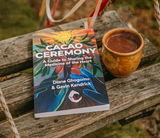
If you are performing this ritual alone, ask yourself the second set of questions, and free-write your answers in your journal. There are more nourishing practices along these lines in our book, Cacao Ceremony, which you can order here.
Questions for lovers
- When you think back to the moment when we chose this life together, what part of that choice feels most alive in you now?
- What is the area of your life where you most appreciate the freedom to explore your own rhythm, your own way of living and doing things?
- Is there anything I could do to provide more spaciousness for you here?
- When we come back together after time apart, what tells you that you’ve arrived home?
- What comes alive in you when you are away from me?
- What are you moving towards in your own life that I might not have noticed yet?
- What is something you do alone that you would love me to understand more?
- Is there a rhythm you used to live by that you miss?
- What would you do with a week entirely your own, if nothing had to be arranged around me (or our family)?
- Where in your life do you feel the pull to slow down?
- Where do you feel the pull to move more quickly?
- What small thing could I do this week that would make your own rhythm easier to live by?
- What would you like us to give thanks for, before we let it go?
- What phase of life do you feel we are now entering, and what will it ask of us?
Solo questions for your journal
- How would you describe the current rhythm of your life?
- What does it feel like in your body when your pace is right?
- What nourishes you that you can only find alone?
- What nourishes you that you can only find in company?
- Who or what do you return to, again and again, that feels like home?
- Which area of your life is flourishing right now, and what have you been doing to make that so?
- Which area needs more of your attention, and what would attention actually look like there?
- What seeds have you planted and never tended?
- What have you been giving your energy to out of habit?
- What freedom do you have now that you would want to keep, if you ever chose to share your life with somebody else?
- What commitment would you want to make to yourself, before you make one to anyone else?
- What phase of life do you feel you are now entering, and what will it ask of you?
With love,
Gavin x
In a world that pulls you in a thousand directions, cacao brings you home to your heart…
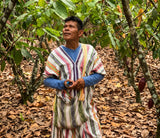
- Order ceremonial cacao, sourced directly from Asháninka growers in Peru. (Subscribe and save 20%!)
- Join our facilitator training and learn to hold space with the integrity this medicine deserves.
- Order our book Cacao Ceremony, a guide for anyone called to share this medicine with the people around them.
- Join my mini-course and learn to carry an open heart from ceremony into everyday life.
